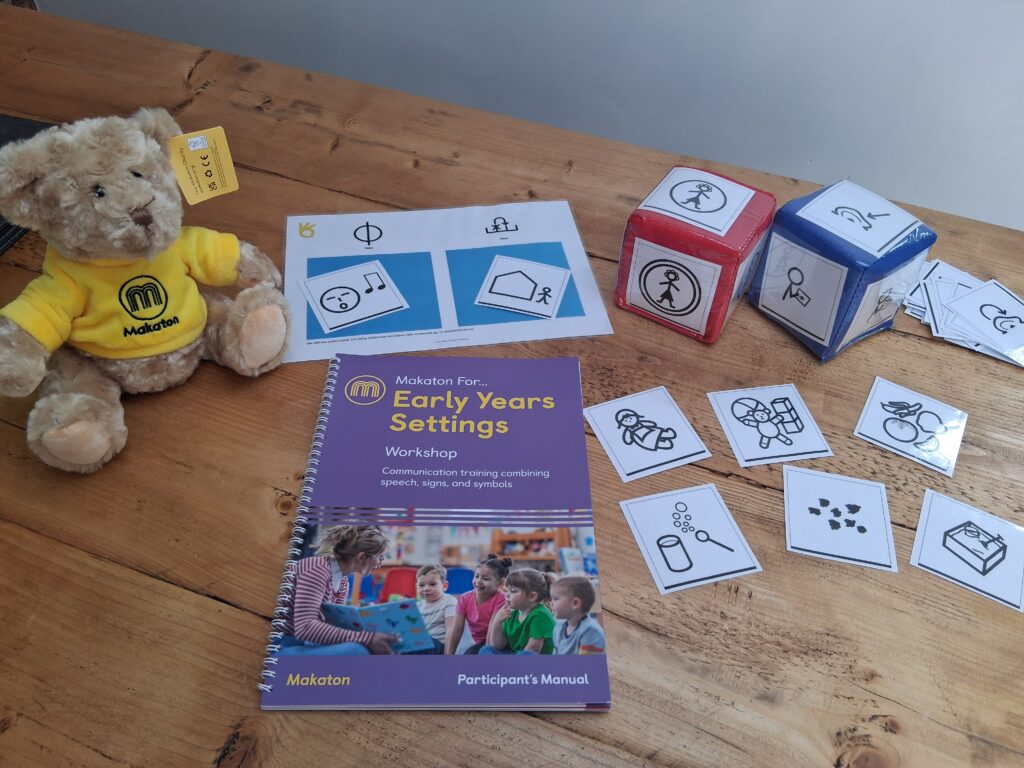
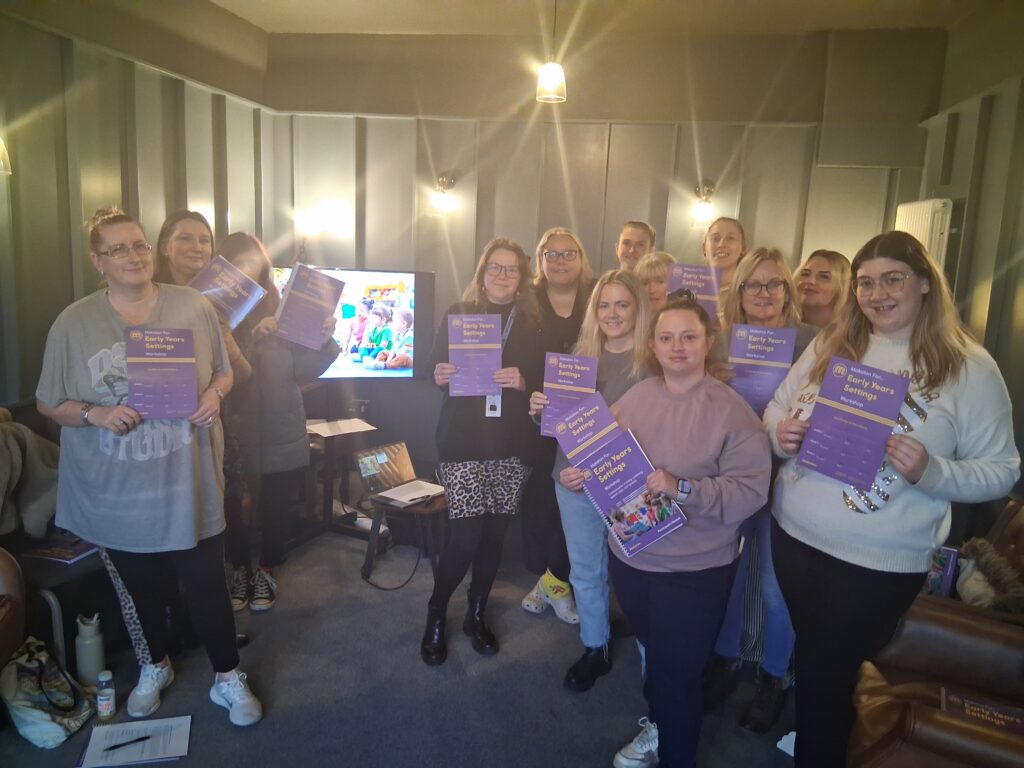
Recently, staff at educational settings for children aged 0-5 have taken advantage of a bespoke Early Years Makaton Training programme lead by Sarah Arthur, Makaton Tutor.
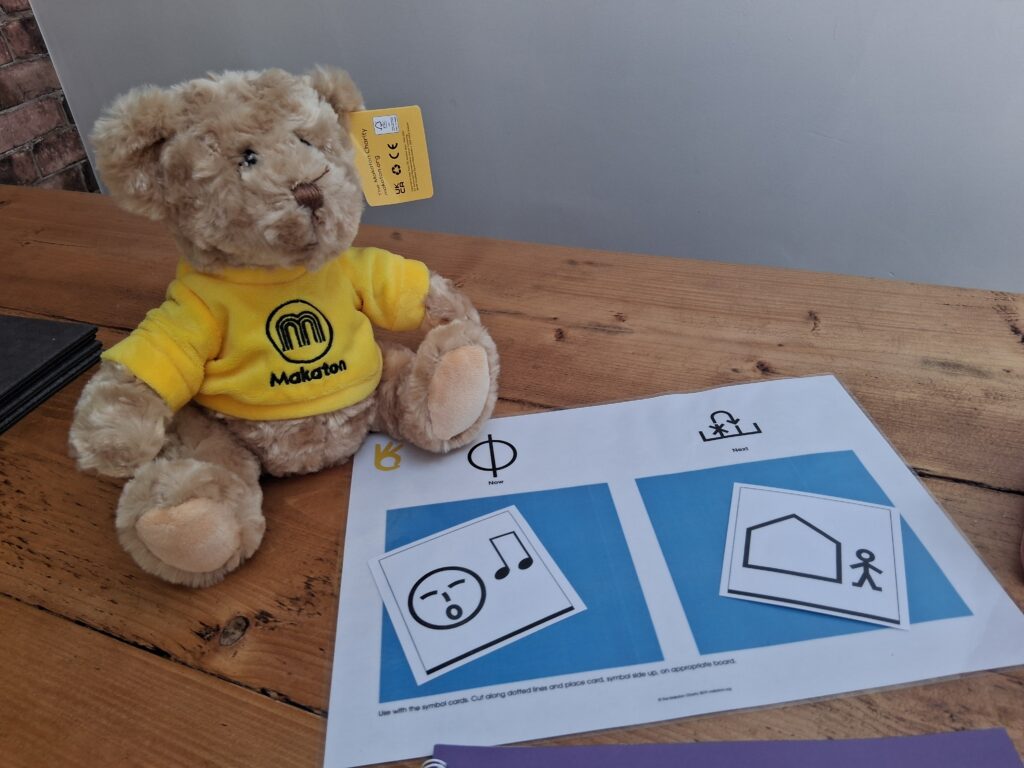
Makaton is an enhanced communication programme that uses signs, symbols, and speech to assist those with communication and learning difficulties.
The signs are taken from British Sign Language, but it is much more than a method of communication for those with hearing loss.
It’s used to support those with learning difficulties, specific speech challenges, developmental delays and more.
The Early Years session covers core topics like how Makaton supports early communication and language development, the communication journey and the importance of visual support, key signs and symbols for daily routines and play, and signing through stories, songs and group activities.
Participants get practical strategies to embed signing into everyday interactions as well as real-life examples to ensure Makaton is used correctly.
Putting this into context Sarah emphasised the importance of being taught with a tutor.
She said, “Some errors can be made when people teach themselves. For example, singing ‘break’ means ‘to break something’, and may be misused to say, ‘we’re taking a break from this activity’, or ‘It’s breaktime’, or other interpretations.”
“Being led by a trainer means that individuals learn how to use concepts properly considering the perspective and understanding of the individual they are communicating with.”
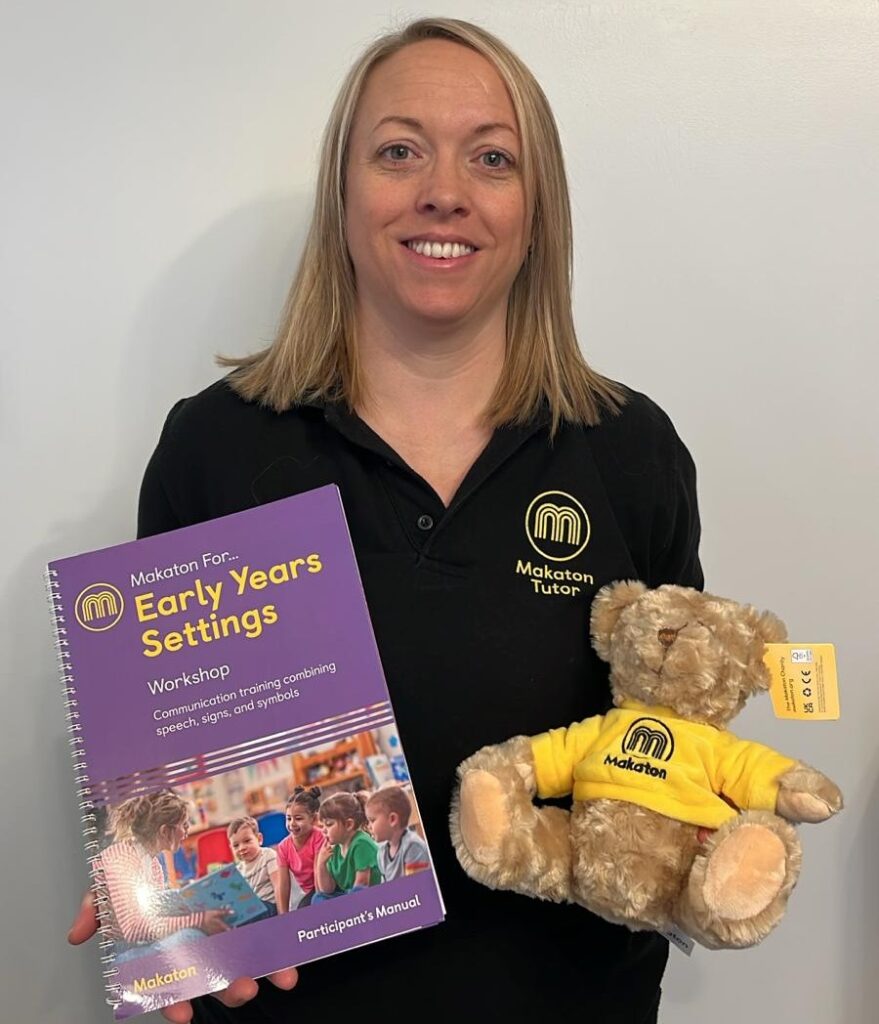
Sarah Arthur, Makaton Tutor said, “I love teaching Makaton to anyone who will listen to me, parents, carers and professionals are all welcome.
“Spreading awareness of Makaton helps open opportunities for children and adults with communication difficulties and helps create a more inclusive community.”
A common experience for those with communication challenges is to have professionals speak to a parent, carer or support worker instead of the individual themselves.
In daily life this means they stand on the outside of conversations about them that they otherwise would have been able to participate in.
For someone who uses Makaton, being able to engage directly gives them a voice and allows them to engage independently, feeling valued and included.
Learning these enhanced communication skills breaks down barriers and opens doors for everyone.
Sarah Arthur said, “I often get comments from people who say ‘I don’t have anyone it would work for.
“This is a huge misconception as so many people find value from having an integrated programme that uses images and signs to complement traditional speech and language.”
Speech and Language Communication Needs (SLCN) are the most common primary need for pupils with Special Educational Needs and Disabilities (SEND) in England’s mainstream schools.
Trends show a steady year-on-year rise in speech, language and communication needs, with 24% of all SEND pupils having SLCN as a primary need and around 25% as a secondary need.
These trends only represent children with identified special educational needs and disabilities.
Many others can benefit from adapted communication and interaction, using signs and symbols in addition to speech to aid their development.
This is only possible by raising awareness and developing these skills in our workforce and community.
Another misconception is that using additional methods of communication could prevent speech.
Sarah said, “I still hear people say they think Makaton will stop someone from speaking; however, it adds meaning to what we are saying and promotes independence.”
“The Early Years programme is great for children at this stage of their journey to help them interact, play, navigate their educational space, understand routines, and share their wants and needs.”
There is also a programme of training for Levels 1-4 that are a great starting point for those wanting to learn Makaton or in addition to the Early Years training.
These levels follow traditional language development, more core vocabulary, signs, and symbols, and adds depth to how Makaton is used, for example creating stories and songs.
This is in addition to other targeted offers for activity providers, people working in mental health, learning disability teams, nursing, dentistry and emergency services.
Taster sessions are ideal for workplaces who want to start introducing Makaton to larger groups, giving everyone the basics to get started.
If you’d like to hear more about the exceptional improvements children can make using Makaton from a family’s perspective read Ava’s Communication Journey.
Early Years settings wanting to take advantage of the Early Years Training can contact [email protected].





Share this article