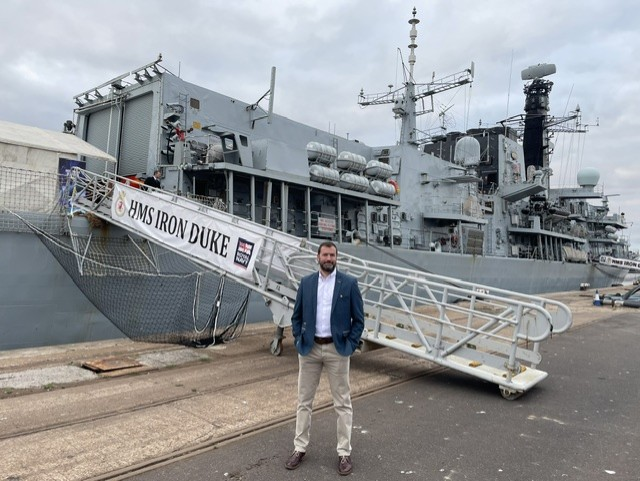
A new officer for the armed forces community has been recruited by North East Lincolnshire Council.
Local Royal Navy veteran, Alex Weeks, has been appointed to the role of Armed Forces Officer in the borough.
The role is the first of its kind in the Council, and is aimed at being the key link between the Council, veterans’ organisations, serving personnel and their families, helping them to navigate services, remove barriers and access the right help at the right time.
Cllr Oliver Freeston, Leader of North East Lincolnshire Council, said:
“In North East Lincolnshire, we have a strong military heritage, and an incredible affinity with the armed forces community.
“We have tremendous respect for them and we value their voices. This move is part of an ongoing effort to promote the support and opportunities that are available in our area to the entire armed forces family.
“We want to strengthen and promote what we have to support those who are already here, and also to attract people who are leaving the military and looking for a place to live.”
Alex Weeks, Armed Forces Officer for North East Lincolnshire Council, added:
“The struggles that some veterans face when they leave the military are well documented. It can be hard for them to find a place to settle down, a job that will stimulate them, and social connections to support them.
“North East Lincolnshire offers all of that and more. We have fantastic community groups and organisations that support veterans, and some great employers who embrace them.
“I’m immensely proud to be the Council’s first Armed Forces Officer, and I’m looking forward to getting out there, meeting members of our local armed forces family, and hearing how the Council can support them,”
Earlier this week, Alex attended the Armed Forces Covenant Conference in Portsmouth, hearing about how other areas are supporting the Armed Forces community through their commitments to the Armed Forces Covenant.
“It was great to be able to go to Portsmouth and hear about how other Councils are supporting their veteran community. We discussed in detail things like housing, education and training, childcare and employment.”
Locally, North East Lincolnshire Council are delighted to be supporting the Armed Forces Day event in Cleethorpes, celebrating the UK Armed Forces community as part of Armed Forces week.
This continues all year round with support and services available to veterans and their families in North East Lincolnshire. To find out more, visit: www.nelincs.gov.uk/your-council/armed-forces. Support for veterans and serving personnel is also available at Gov.uk.

Share this article