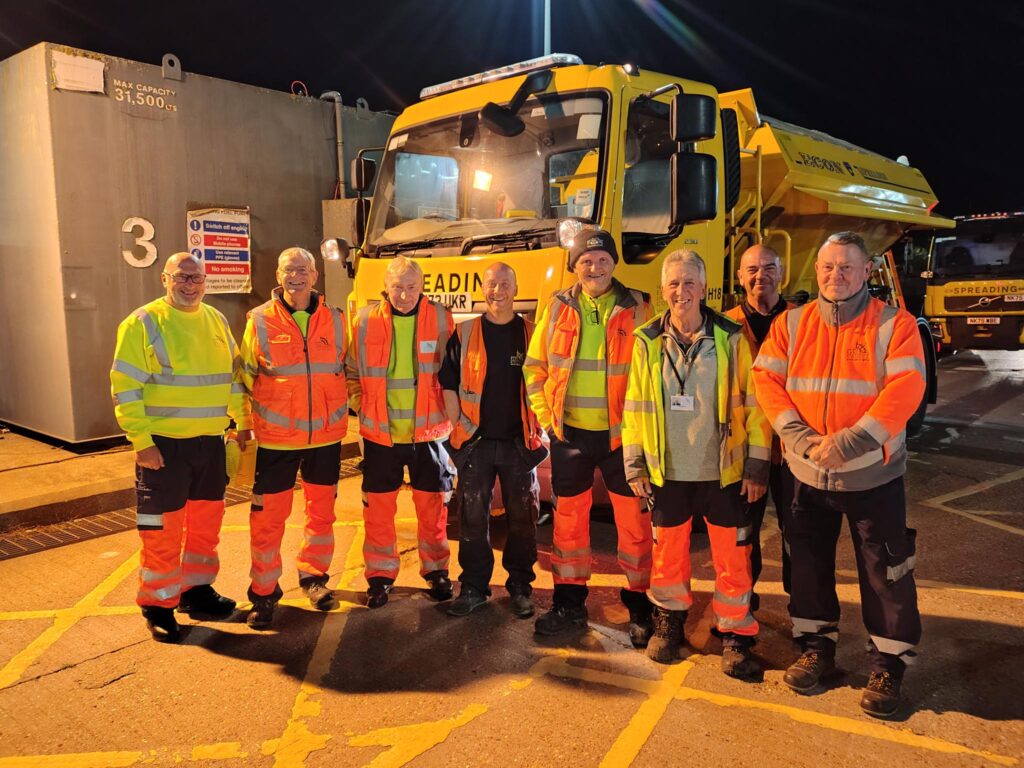
As temperatures begin to fall and winter weather approaches, the Council’s Highways team are fully prepared and the gritters are ready to respond to wintery conditions. Preventative gritting will take place when frost, ice or snowfall is forecast to reduce the risk of hazardous road conditions. The team will continue to monitor weather updates around the clock and are on standby to take action where necessary to keep the roads as safe as possible for motorists, cyclists and pedestrians.
Each time the gritters are deployed, they cover more than 350km of roads, including all A and B roads, important bus and commuter routes, roads leading to hospitals, ambulance stations, fire stations, bus depots and roads serving shopping centres.
Teams work on a rota to monitor weather updates around the clock and are on standby to respond to frost, ice and snowfall. Each forecast contains information on minimum temperatures for both air and road surface temperatures and any expected winter hazards such as frost, ice or snow. From this, a decision is made whether to grit the boroughs roads and how much salt is to be used when treatments are required. These decisions are sometimes made very late at night, or very early in the morning, and gritters may have been out and salted the roads before you even wake up.
Why do we grit?
Gritting helps prevent ice and frost from forming on the roads, reducing the risk of accidents and keeping traffic flowing. When snow is forecast, our teams also grit to help stop it settling, making it easier for everyone to get where they need to go.
Our dedicated gritter drivers are on standby throughout the season. Each driver follows a carefully planned route, but they can also be called out at short notice to respond to changing conditions, even in the middle of the night.
How to prepare yourself for driving in winter
As temperatures drop, it’s important to make sure your vehicle is winter-ready. Here are some top tips:
- Check your screen wash, tyres, and anti-freeze.
- Keep de-icer, warm clothing, food, and water in your car.
- Always check the weather forecast before travelling.
- Sign up for Met Office cold weather alerts: https://www.metoffice.gov.uk/weather/warnings-and-advice/seasonal-advice/cold-weather-alerts
If you must travel in snowy or icy conditions:
- Slow down and increase your stopping distance — it could take up to 10 times longer to stop.
- Avoid harsh braking, sharp steering, and sudden acceleration.
- Keep your fuel topped up and your windows clear.
- Use dipped headlights to improve visibility.
- Watch out for hidden icy patches, especially under bridges
Help keep the gritters moving on the road by:
- Pull over safely if a gritter is behind you.
- Park close to the kerb or on your drive to allow gritters to pass.
For more information about local gritting routes and winter weather advice, visit www.nelincs.gov.uk/winter.
The latest updates on gritting treatments in North East Lincolnshire can also be found on the council’s Facebook page.



Share this article