A180 bridges
Vital structural repairs are being undertaken to ensure the main road into Grimsby and Cleethorpes can safely carry traffic in the decades ahead.
The project, one of the most important of its kind along the A180, is being supported by £8-million of funding from the Department of Transport. This was secured by North East Lincolnshire Council due to the importance of the road for the borough’s economic and visitor growth in the future.
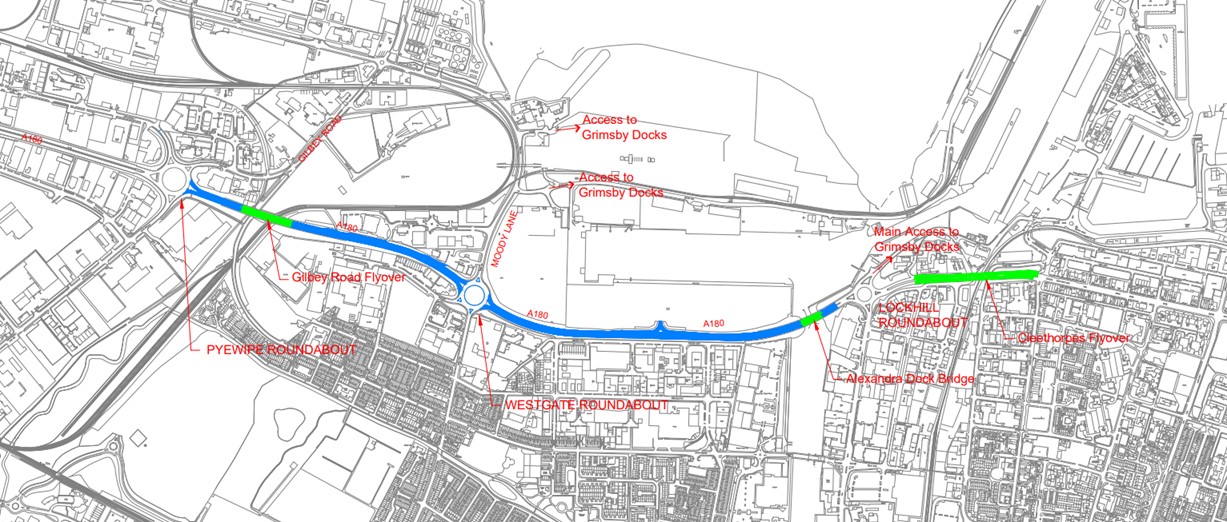
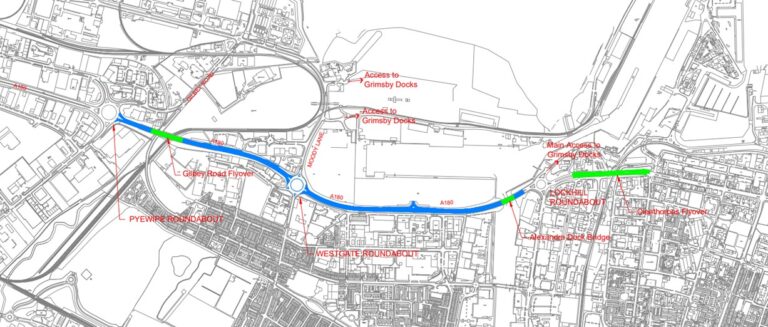
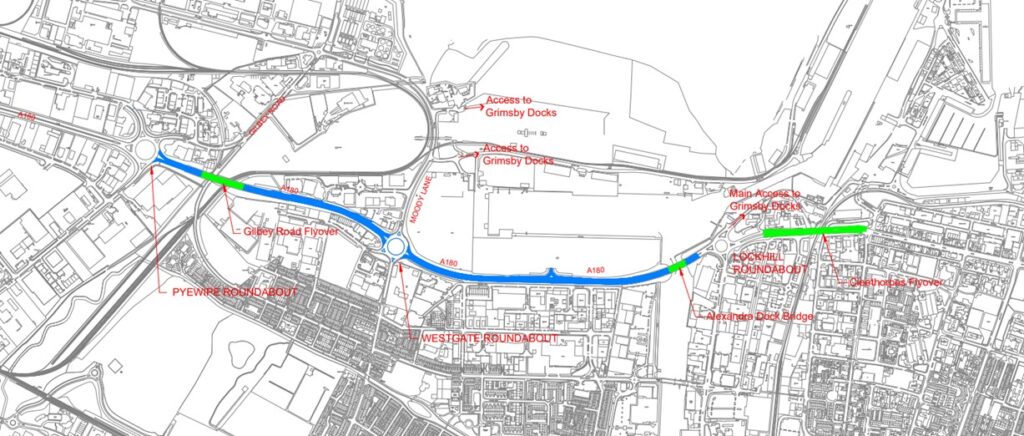
Work has already taken place to two of the three structures, Gilbey Road flyover and Cleethorpe Road flyover. Work is still to take place on Alexandra Road bridge. They all form the route into Grimsby between Pyewipe Roundabout and Riby Square.
Regular inspections and condition reports have shown deterioration of the bridges’ carriageways and the underlying structures over recent years. The works will include deck repairs, bearing replacements, re-waterproofing, installation of concrete and steel safety barriers and carriageway resurfacing. Whilst there is no imminent danger, the analysis shows this work is essential to preserve the life of the bridges in the longer term.
Latest work
Refurbishment works to Alexandra Dock flyover between Moody Lane / Westgate roundabout and Lockhill roundabout has started.
Previous works have seen the Gilbey Road bridge and Cleethorpe Road bridge refurbished and re-waterproofed. This is the same type of work to secure the future of the middle bridge over Alexandra Dock (the section between Lockhill roundabout at the junction with Victoria Street, and Westgate roundabout).
The programme below is subject to weather conditions and progress on site, but is currently expected to be a 24 week programme. This will include a full resurfacing of the A180 carriageway between Westgate roundabout and Lockhill roundabout as part of the works.
There will be free local recovery provided within the contraflow sections for any cars that break down or if there are accidents during the works.
Detailed programme
CR Reynolds initially undertook temporary works to set up the site and build new crossover sections so that traffic will be able to cross from one side of the bridge to the other at various points.
Full traffic management for the refurbishment scheme, to install contraflows, is now in place and the main refurbishment are underway on the westbound carriageway.
Once the westbound works are complete, a full overnight closure will then be required to reverse the traffic management and switch the eastbound traffic management to the opposite carriageway.
Works will then take place on the eastbound carriageway, and again, take approximately 10 weeks, following the same pattern as the westbound works.
There will be free local recovery provided within the contraflow sections for any cars that breakdown or if there are accidents during the works.
The main diversion route will be through the centre of Grimsby to avoid the works. Abnormal load carriers and local businesses have been advised of the works.
History of the bridges
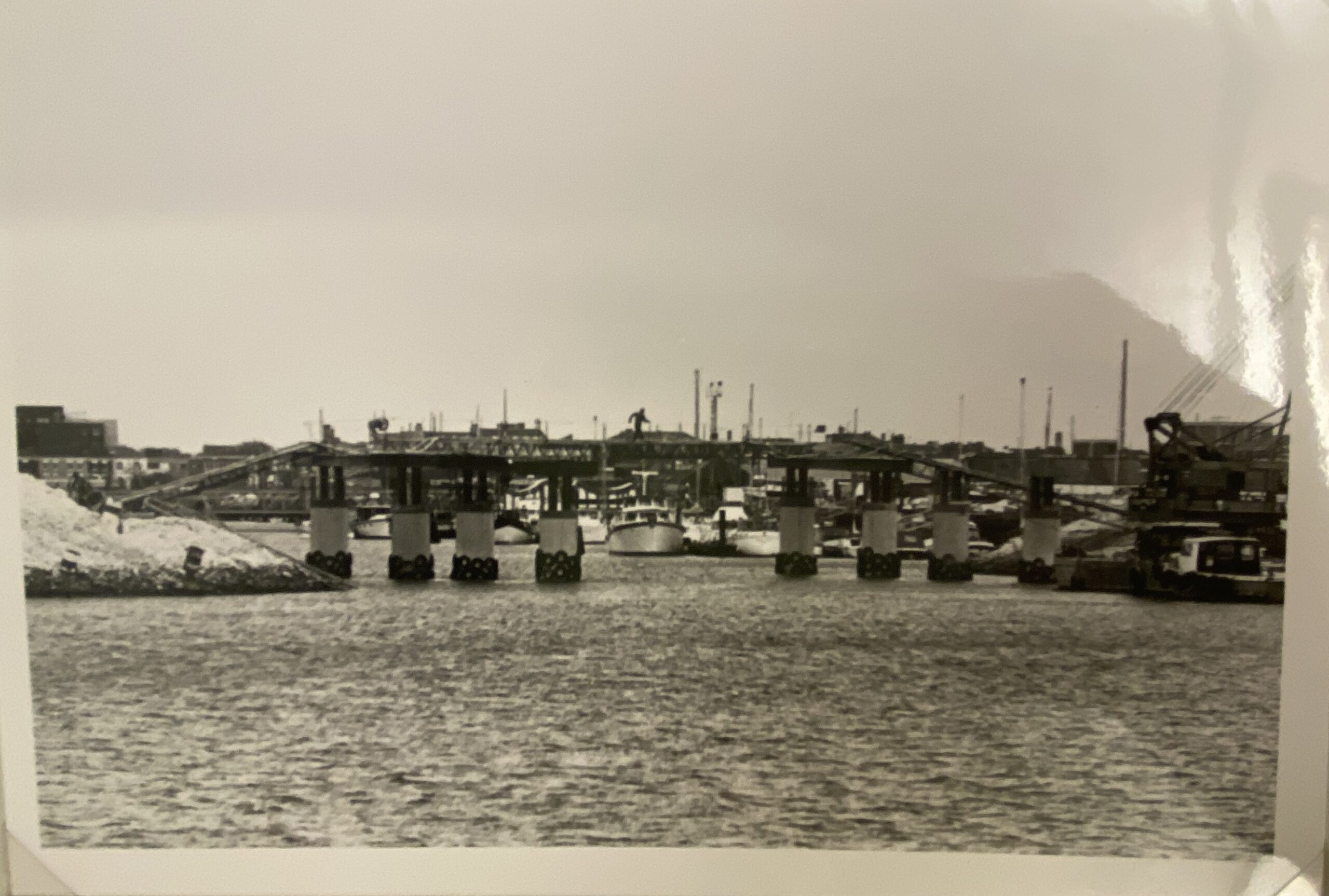
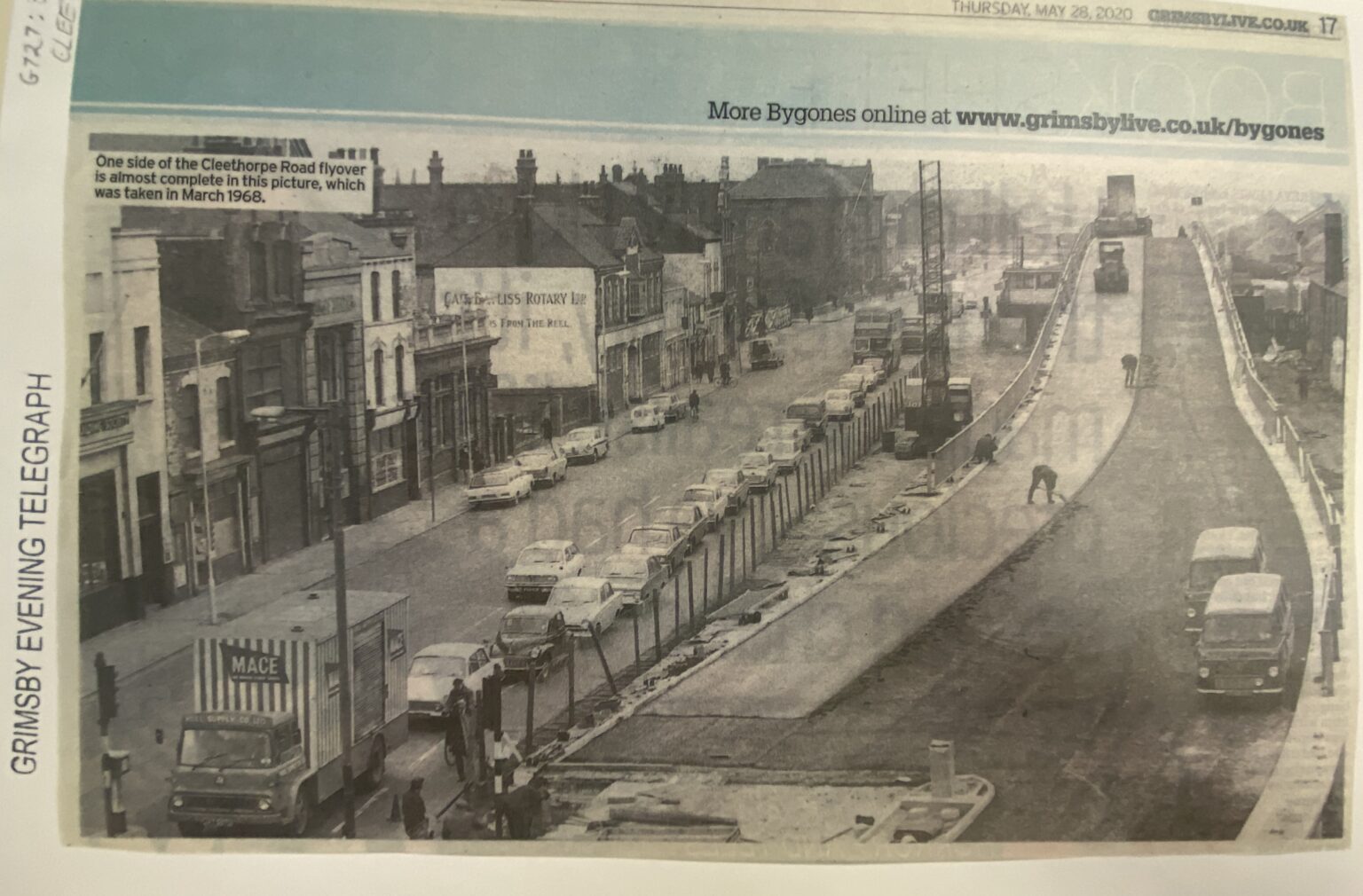
Opened on 16 October 1968, by the Mayor of Grimsby, Councillor Sleeman, documents suggest that the seeds for the £1million 1,100ft ‘Cleethorpe Road’ flyover, between Grimsby’s Lockhill and Riby Square, were first planted in the early 1950s. Until its construction, traffic passing from the two key areas of the town had to stop at Cleethorpe Road railway crossing, which during Grimsby’s fishing heyday was not a convenient place to be stuck.
It was noted in 1911 that almost 180,000 tonnes of fish alone had left the port that year, an increase of almost 179,500 tonnes compared to 1854. This was largely due to the arrival of the railway, in 1848, allowing for the transportation of fish to Billingsgate Market in London, and other areas of the country. At its peak, Grimsby was generating around 20,000 metric tons of fish a day, a mammoth amount leaving the area by road or rail, the latter remaining the dominant method of transport at that time.
It can only be imagined how difficult crossing the railway to the eastern part of the borough would be at this time.
Brian Hames, an elderly resident of present-day Grimsby, said: “The flyover was certainly needed and was long overdue. Everyone got stuck at the railway crossing, which was frustrating if you were trying to get anywhere.
“The problem was, the fish industry was beginning to change and the reason the flyover was put there, the railway, was also changing in response.”
With road haulage on the increase, the railways were dealt a further blow when chair of the British
Railways Board, Richard Beeching, declared the closure of a number of major routes as part of the railways’ rationalisation. The East Lincolnshire line serving Grimsby directly from the south and east of England was closed to through-traffic in 1970, with just a limited freight service to Louth which ceased in 1980.
The flyover was as controversial as it was useful, with some saying the design was innovative while others, including Alderman Larmour, declaring it “ugly”. The bridge ultimately won architectural commendations by The Civic Trust, in 1970.
It was also the subject of a “Think Again” campaign in 1966, with a small number of local councillors and residents deeming the Cleethorpe Road flyover unnecessary at the time, but with a wider vision for the town, increasing traffic, and a significant £750,000 of funding from the Government, the so-called “overbridge” plan was passed in 1963 with a Council majority.
Its construction also saw the demolition of several local streets, and subsequent rehousing of residents, but these homes were reported to have been in decline at this time. The Royal Hotel, home to acclaimed actress Patricia Hodge, also succumbed to the new bridge, its ‘Coffee House’ stained glass window now at home in the Town Hall’s Time Trap museum. Even Albert, the Prince Consort, was unsafe, first moved from his plot at the former Prince Albert Memorial Gardens to make way for a British Rail rail freight terminal, then to a space across Cleethorpe Road, and again to the dock offices to make way for the flyover.
The flyover was reported by the Grimsby Evening Telegraph in 1966 as being more than adequate for the expected 300 vehicles every five hours, including transport from berthed roll-on roll-off vessels. Although fixed and updated in 1975 and 2001, the bridge now carries an estimated 27,000 vehicles each day and requires much-needed work if it is to remain an important artery into Grimsby, Cleethorpes, and other areas of the town.