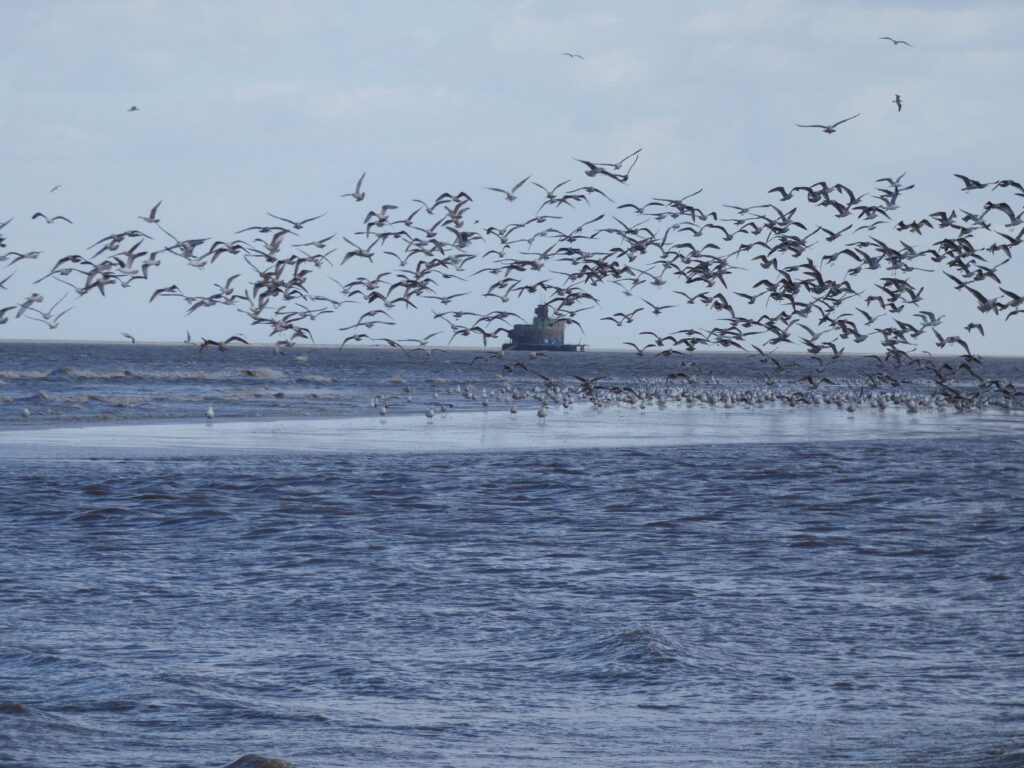
If you are finding this harsh, wet winter weather hard, spare a thought for our shorebirds in North East Lincolnshire who have no shelter!
It is crucial that birds can eat well and rest undisturbed to make it through the winter so please when you are out on our coastline we urge you to give them the space to do so.
The beginning of the year has seen freezing temperatures, icy cold winds and lots of rain.
The Humber Estuary is a vitally important European Marine Site and hosts hundreds of thousands of shorebirds over winter. The intertidal mudflats are richly stocked with marine invertebrates – the small animals that live in our estuary like worms, snails and shellfish – which are a vital food source. Our estuary and coast also form part of the East Atlantic Flyway.
This is an important migratory route for many species and stretches from the Arctic to the African west coast. Many Arctic breeding birds migrate along this highway, stopping off at coastal sites like ours to spend the winter. The time they spend feeding here is crucial to the next stage of their journey; their return in spring to their northern breeding grounds.
(To find out more about the East Atlantic flyway and which birds visit us in winter, check out our story map here: Life on the Saltmarsh)
When our shorebirds arrive to spend the winter here, they face a range of challenges. To stay warm, our shorebirds must eat to build up and conserve body fat. The less they eat, the quicker they will break down this fat making it harder for them to stay warm. If this continues, they will start to break down muscle making them weaker and more vulnerable.
In stormy or freezing conditions, foraging for food on our mudflats becomes harder. The shorter daylight hours mean that some waders switch to night-time feeding but not all species can adapt like this, meaning they must feed as much as possible during the day. The sad truth is that winter can lead to an increase in mortality.
Given the pressures our shorebirds face, how can we help them? Simply put, we can give them the space they need to feed and rest without disturbance.
When enjoying our coastline this winter, please keep the following in mind:
- Be aware of the birds.
- Give them plenty of space to feed and rest.
- Keep your dog under close control, especially near the tideline or where birds are roosting. Please never allow your dog to chase birds.
For example:
If you notice birds feeding close to the tide edge while you are walking along our beach, please give them a wide berth so they can continue feeding undisturbed.
Every flight a bird has to take due to disturbance reduces its energy reserves, putting more pressure on them as individuals and impacting their ability to successfully breed.
If you notice disturbance along our coastline, please report this via the Humber Nature Partnership’s website: Humber Nature Partnership – Report wildlife disturbance
Find out more…
To learn more about the DUNE Project, visit our webpage where you can sign up for our monthly newsletter. You can find out more about the project, upcoming coastal events and what wildlife you can find in our area!






Share this article