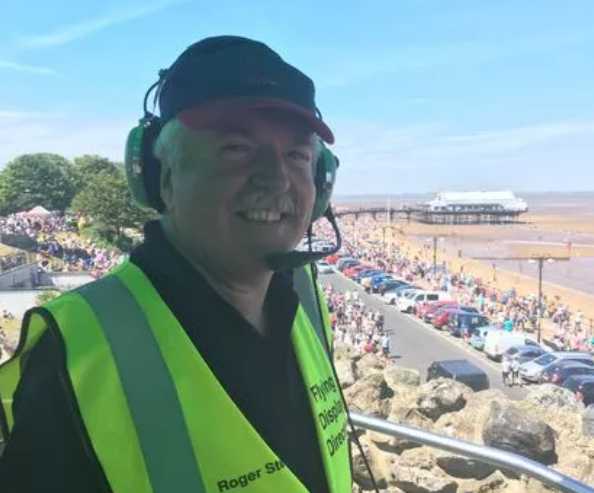
As part of the Armed Forces Weekend in Cleethorpes, there’s some wonderful aircraft displays each year. But behind getting those aircraft here, there’s nine months of work, where the Armed Forces Major Events Team works with a Flying Display Director (FDD) to coordinate funding, availability of aircraft and scheduling.
We managed to secure some time with the FDD, Roger Steele, to have a more in-depth look into what happens in Cleethorpes!
Roger is a true Meggie, born in Cleethorpes. He has been involved with flying displays, in one form or another, since 1992. He has served as an air traffic control officer in the RAF for 27 years, serving in UK, Germany, South Atlantic and Middle East. He is a Tier 3 Civil Aviation Authority (CAA) and Military Aviation Authority (MAA) accredited FDD (Tier 3 means he can be the FDD at the most complicated flying displays with unlimited numbers of aircraft), and is co-director of a company R5 Air Displays Ltd that run 20 to 30 flying displays a year from single item events to major multi display shows
Here’s what Roger had to say…
It all starts in September…
The process kicks off the September before the display, as we begin applying for military assets. Getting these displays secured early is critical-they’re in high demand and require significant coordination. As the new year begins, we’re already deep into planning, starting with the flying display risk assessment and applying for a Special Event Air/Ground frequency to ensure seamless communication during the show.
Keeping the skies safe
Safety is everything in aviation, especially during public displays. One major piece of the puzzle is securing restricted airspace. This ensures that only approved aircraft-ranging from fast jets to paragliders, drones, kites, and even small balloons-can enter the area during the event. This sanitised airspace helps protect both pilots and spectators.
Permission to fly
This year as only military aircraft are participating in the event, the paperwork is slightly easier as only the MAA are sent notification of the event. This includes details of aircraft attending, name and details of the Event Organiser and who will be the FDD.
Teamwork makes the dream work
Once the display slots start to firm up, we dive into the complex task of scheduling. Many teams have multiple shows on the same day, so we coordinate carefully to lock in timings that work for everyone. We also liaise with external agencies like Humberside Airport and North Coates airfield to ensure airspace usage is deconflicted and everything runs smoothly.
Pilot’s Notes are produced and distributed-these documents provide all the details crews need for the event, from procedures to safety zones. We verify that all crew documentation is current and confirms their eligibility and permitted display levels.
Setting the stage
In the week before the show, we place marker buoys with the help of the Beach Safety team. These markers are crucial-they give visual reference points to help pilots maintain safe separation distances from the crowd.
Show day in full swing
Come display day, the tempo picks up. Alongside the Deputy Flying Display Director (Dep FDD), I monitor the airspace for any hazards, like bird activity or rogue drones. If anything threatens the display area, we quickly notify the crews to take action.
We also keep a watchful eye on the crowd line. If any enthusiastic spectators get too close, we alert the pilots to fly further away from anyone beyond the Crowd Line (a line which runs from the end of the pier towards the leisure centre). Ultimately, if the required separation cannot be achieved the FDD may stop the display. Even with restricted airspace in place, I use flight-tracking apps to spot any unexpected aircraft nearby and make sure they don’t infringe on our display zone.
Before every flight, each pilot receives a phone brief covering weather, safety, and the latest confirmed timings. If anything changes-say an aircraft becomes unserviceable (it breaks down) or weather causes a delay-we make sure organisers, commentators, and the PR team are informed immediately.
Eyes on every detail
During the display, compliance is key. I monitor every manoeuvre to ensure regulations are met. Crews are allowed two safety warnings during the event. If a third is necessary, their display is halted – safety always comes first.
After the final flypast, I debrief each display team to review separation compliance and gather feedback – what worked well, and what could be done better next time.
Wrapping up
Once the event is over, the work isn’t quite done. A detailed report is sent to the MAA, outlining every aircraft that took part, what went well, what lessons were learned, and whether any warnings were issued. This report is shared with the CAA to help all in the air show industry improve and build even better displays for the future.
What’s flying at the Armed Forces Weekend this year?
The schedule of flying for this weekend is as follows: (all displays are centred over Central Beach area, FDD uses Ross Castle)
Saturday 27 June
1200: Chinook flypast
1215: Typhoon display
1310: A400M flypast
1500: RAF Tutor display
Sunday 28 June
1530: RAF Tutor display
1600: Typhoon display
1612: Spitfire display

Share this article