Stop smoking


Smokefree North East Lincolnshire is here to help!

NELC SMokefree logo

We get that quitting is hard, but you’re not alone. Our free service is on hand to support you, with flexible options whether that’s face-to-face appointments or online.
We are here to support you, when you are ready. Start by referring yourself through our quick and easy online form:

Speak to us

If you’d prefer to speak to someone or have any questions, email [email protected] or call 01472 325500 – Monday – Friday, 8:30am – 4pm (except bank holidays).

Drop in sessions

Come and speak to our team face-to-face about what we do or to refer yourself for support. Find out more including times and locations across North East Lincolnshire.


In-person support

Benefit from 1-to-1 personalised sessions held in-person at a variety of times and local venues, like community centres and GP surgeries across Grimsby, Cleethorpes and Immingham.

These regular, face to face meetings will be over 12 weeks with one of our Wellbeing Workers who will support you on your journey to being smoke free. You can access: 

  • A course of free Nicotine Replacement Therapy (NRT) products and/or free vape starter kit over 12 weeks 
  • Carbon Monoxide (CO) breath tests to help you track the progress you make 
  • Access to regular support and advice to keep you going 

Mondays

  • The Trin, Trinity Road, Cleethorpes, DN35 8UN, 1pm to 3pm

Tuesdays

  • Fusion Centre, Ladysmith Road, Grimsby, DN32 9SW, 4pm-8pm
  • Roxton Practice, Pelham Road, Immingham, DN40 1JW, 3pm-6.30pm
  • Stirling Medical Centre, Stirling Street, Grimsby, DN31 3AE, 10am-1pm

Wednesdays

  • Freshney Green Primary Care Centre, Sorrel Road, Grimsby, DN34 4GB, 1.30pm-6pm
  • Taylor’s Avenue Medical Centre, Cleethorpes, DN35 0LN, 3pm-6pm
  • YMCA, 21 Freeman Street, Grimsby, DN32 7AB, 12pm-2pm
  • West Marsh Community Centre – coming soon

Thursdays

  • Centre4, Wootton Road, Grimsby, DN33 1HE, 1pm-3pm

Fridays

  • Freeman Street Market, Freeman Street, Grimsby, DN32 7AB, 9am-1pm
  • St Peter’s Hall (opposite the church), St Peters Avenue, Cleethorpes, DN35 8HP, 10am-12pm

Swap to Stop – vape programme

Swap to Stop is available to adult smokers in North East Lincolnshire who want to quit smoking. This programme is designed for people who prefer a more independent, but guided approach to quitting. 

The scheme provides a FREE vape starter kit and salts tailored to you to help you swap to a less harmful alternative to cigarettes. Our Wellbeing Workers will call to check in with you to see how you have got on after 28 days. 

if you have never smoked you should never start vaping. Vaping is intended solely as a tool for people who already smoke, if you start using it without smoking before it can expose you to nicotine unnecessarily, increasing the risk of developing a dependency.


‘Smoke Free’ app

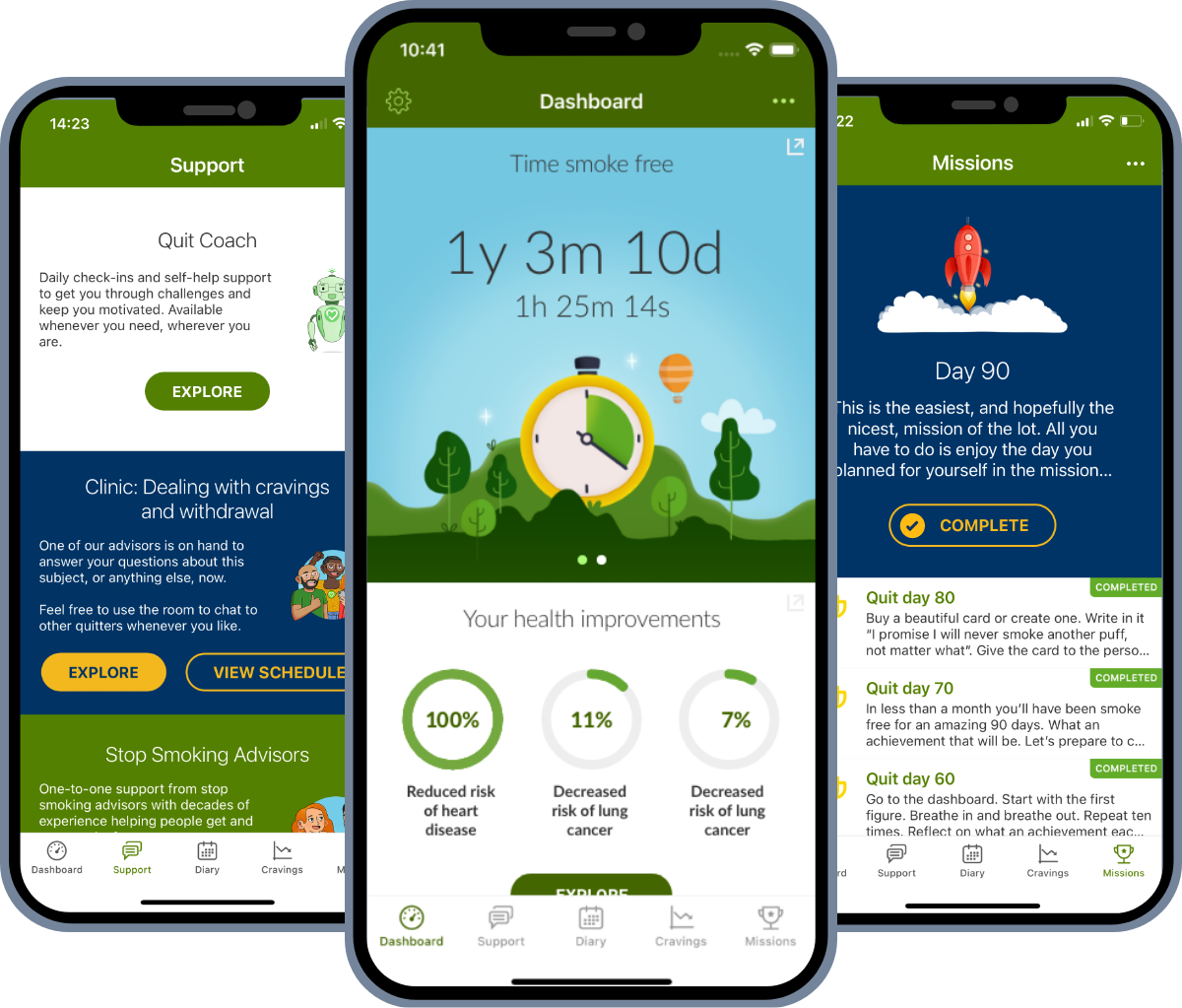
Residents of North East Lincolnshire can also access premium features of the Smoke Free App which offers a convenient and anonymous way to access stop smoking support.

This offer includes: 

  • 6 months FREE access to the app with tools to increase motivation and reward progress 
  • Unlimited on-demand support with 24/7 Stop Smoking Advisors 
  • Up to 12 weeks supply of Nicotine Replacement Therapy (NRT) supplies and/or a vape delivered directly to your door 
Apple storeDownload on the App Store

Google playGet it on Google Play


Remote support

Join sessions via phone or video call at flexible times including mornings, afternoons and evenings, if you might find it difficult to attend sessions during the day. 


Stop smoking products

If you want to stop smoking, several different ways to quit are available to help you beat your addiction and reduce withdrawal symptoms. There’s lots of products on offer, and each has different advantages and disadvantages. The right one for you depends on your smoking habits and preferences.

The main reason that people smoke is because they are addicted to nicotine. NRT is a medication that provides you with a low level of nicotine, without the tar, carbon monoxide and other poisonous chemicals present in tobacco smoke. It can help reduce unpleasant withdrawal effects, such as bad moods and cravings, which may occur when you stop smoking.

This can include:

  • Nicotine patches
  • Nicotine gum, lozenges or microtabs
  • Inhalators
  • Mouthspray
  • Vapes

Read more on the NHS website.


Benefits of quitting

You’ll notice some benefits within days or weeks:

  • your senses of taste and smell improve
  • you start to breathe more easily
  • you have more energy

Other benefits will follow, including:

  • better blood circulation to your heart and muscles, which will make physical activity easier
  • improved lung function, leading to reductions in any cough, wheezing or other breathing problems

Your longer-term risks of cancer, lung disease, heart disease and stroke will be significantly reduced, and:

  • after 1 year, risk of heart attack halves compared to a smoker’s
  • after 10 years, risk of death from lung cancer falls to half that of a smoker
  • after 15 years, risk of heart attack falls to the same as someone who has never smoked

You will also be less likely to develop type 2 diabetes, bone disease including osteoporosis, eye disease and dementia.

You may think that smoking supports your mental wellbeing, and helps you to relax, deal with stress and anxiety, and cope with life’s difficulties.

In fact, the opposite is true. Stopping smoking boosts mental health and wellbeing.

Evidence shows that after the withdrawal stage of quitting, people have reduced anxiety, depression and stress.

People who have quit also have increased positive mood compared with people who continue to smoke.

For some people, a big reason for stopping smoking is to be there for their family and friends.

If you have stopped smoking and are physically and mentally healthy, you’re more likely to be able to support your loved ones – and be a part of their life in the future.

Also, becoming a smoke-free role model means your children are much less likely to take up smoking.

Quitting also means you’ll protect your loved ones from the potential health harms of second hand smoke (sometimes called passive smoking).


Real life stories


Smoking during pregnancy

Learn more at NHS England » National smoke-free pregnancy incentive scheme or download the leaflet (PDF, 687KB)

Frequently Asked Questions

Yes, stop smoking support through the NELC Wellbeing Service is completely free. You’ll get access to expert advice, tailored behavioural support and tools to help you quit for good.

You can find drop-in sessions at various community locations across North East Lincolnshire.

You can find out how much money you could be saving by stopping smoking by using a calculator.

On average the national spend on tobacco per smoker is around £2,338 – that’s nearly £200 per month! Quitting means more money in your pocket for holidays, hobbies and more. 

Some people worry about gaining weight when they quit smoking because nicotine can suppress appetite, so when you stop, you might feel hungrier. 

Staying active and choosing healthy snacks can help, and any small weight gain is less harmful than smoking. The council’s wellbeing team offer weight management support and a 12-week programme if you need extra support. 

Cravings happen because your brain is used to getting regular doses of nicotine. When you stop, it takes time for your brain to adjust. Cravings are usually at their strongest in the first few days and fade over a few weeks.

Proper use of Nicotine Replacement Therapy (NRT) will help with withdrawal symptoms but probably not get rid of them completely at first. These include: 

  • Nicotine craving as your brain misses the fix, this usually goes away after a few weeks 
  • Trouble sleeping due to nicotine leaving the body, this usually lasts 2-3 weeks  
  • Dizziness/feeling light headed due to more oxygen going to the brain instead of carbon monoxide, this should stop after a few days 

Strategies to help you cope with cravings can include ensuring cigarettes are not available to you, ensuring proper use of NRT and reminding yourself that the cravings will pass. 

Being around other smokers, whether that is at work, home or socially can make quitting more challenging. But there are ways to protect your quit attempt: 

  • If you don’t live with a smoker, that’s great news! You’ll have fewer triggers and temptations. Still, it’s helpful to ask friends or family who smoke not to do so around you.
  • If you do live with a smoker, it’s important to talk to them about your quit attempt. Ask if they can avoid smoking near you and keep cigarettes out of sight. Even small changes in your environment can make a big difference.

Support from others is key. Let your friends, family, and colleagues know you’re quitting and ask for their encouragement.

Nicotine vaping is substantially less harmful than smoking and it’s also one of the most effective tools for quitting.

Vaping is not completely harmless, and it’s only recommended for adult smokers to quit tobacco smoking. Vapes don’t have most of these harmful chemicals, like tar and carbon monoxide.

If you have never smoked, you should never start vaping. Vaping is intended solely as a tool for people who already smoke, if you start using it without smoking before it can expose you to nicotine unnecessarily, increasing the risk of developing a dependency.


Latest ‘smoking’ news