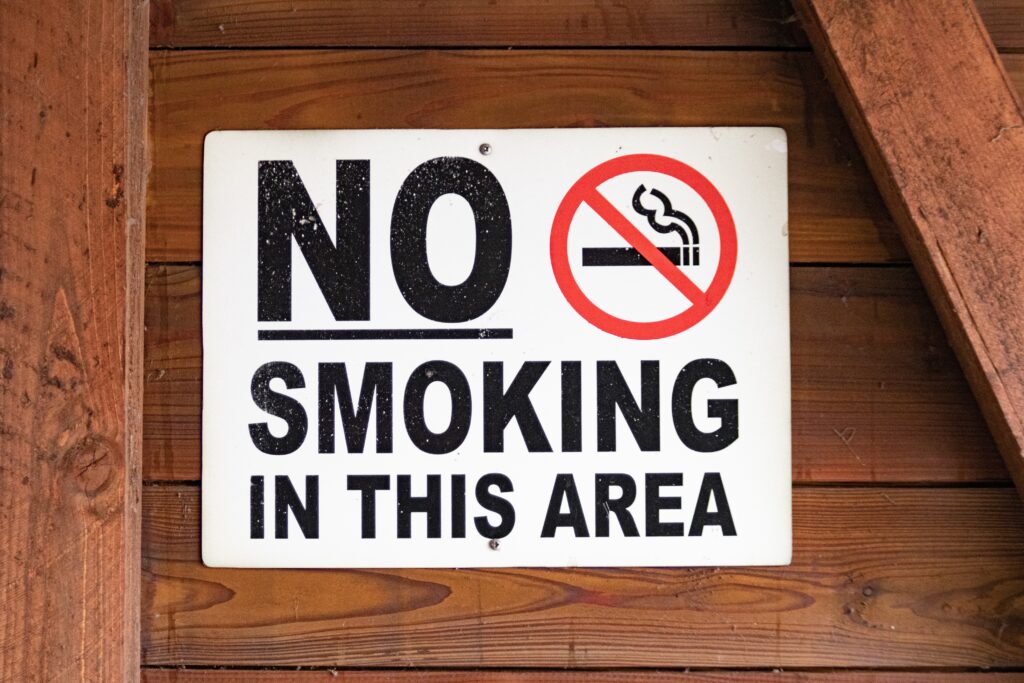
This week marks 19 years since smoking was banned in indoor public places across England. Health leaders are celebrating the impact the legislation has had across Humber and North Yorkshire, where the number of people smoking across the region has nearly halved since its introduction, while looking ahead to Tobacco and Vapes Act, which comes into force in six months’ time.
Introduced on 1 July 2007, the smokefree law made it illegal to smoke in enclosed public spaces and workplaces, protecting millions of people from the harmful effects of secondhand smoke in restaurants, pubs, bars, shops, offices and other indoor settings.
Since the legislation came into force, smoking rates across Yorkshire and the Humber have fallen from 22% to 12%, showing significant progress towards a smokefree future. However, health leaders say there is still a long way to go to reduce the harm caused by tobacco and support people to quit smoking.
The smokefree law has contributed to thousands fewer hospital admissions for heart attacks and a reduction in childhood asthma admissions in the years following its introduction. It also helped increase public awareness of the dangers of secondhand tobacco smoke in homes, cars and other enclosed spaces.
This year’s anniversary comes at a significant moment for tobacco control. This week also marks six months until the Tobacco and Vapes Act introduces the smokefree generation policy on 1 January 2027. Under the new law, anyone born on or after 1 January 2009 will never legally be sold tobacco products, helping to prevent future generations from becoming addicted to smoking.
The legislation has strong public backing, with 75% of people across Humber and North Yorkshire supporting the Government’s plans to create a smokefree generation.
Scott Crosby, Associate Director of the Centre for Excellence, said: “Over the last two decades we have seen measures be introduced to reduce smoking, from smokefree legislation and standardised packaging to banning smoking in cars carrying children. Throughout that time, public support for action on tobacco has continued to grow.
“Health is one of the issues that matters most to people. Too many families have experienced the devastating impact of smoking-related illness and do not want future generations to face the same harm.
“We have made remarkable progress over the past 19 years, but tobacco remains the leading cause of preventable death and illness. The tobacco industry continues to profit from addiction while communities bear the health and economic consequences.
“We welcome the smokefree generation policy because it focuses on prevention, helping to stop young people from ever starting smoking while continuing to support current smokers to quit. It has the potential to save thousands of lives across our region and bring us closer to a smokefree future.”
Katy Connolly, a former smoker who now works as Communications and Marketing Manager for the Centre for Excellence, said: “As a former heavy smoker at the time of the introduction of the indoor smoking ban in 2007, I remember clearly how the world changed overnight. I made the obvious grumbles at the time the legislation was first announced, but when it was introduced, my overriding memory is how pleasant it was to be able to see across the room when you were in restaurants and pubs without squinting; how much nicer it was to eat a meal and smell only your food, without wafts of tobacco smoke, and how great it was not to have to wash your hair after a night out just because the smell of smoke was so overpowering.
“Importantly, it reduced the amount that I smoked. Instead of just lighting up, it put a pause in – made me consider other people to try and find a good time to go outside to smoke. It made smoking less convenient, more of a hassle and started the process of de-normalising it. I’m proud to say I quit for good two years after the introduction of the indoor smoking ban, and the evidence shows us that hundreds of thousands of others did the same.”
For help to quit today, get in touch with your local stop smoking service at www.nelincs.gov.uk/stop-smoking or call 01472 325500.






Share this article